
Process Comparison
Powder Metallurgy vs Casting: How to Choose for Cost, Geometry, and Volume
A practical comparison of PM and casting for structural parts, gears, and high-volume components

Yao Qingpu
Powder Metallurgy Manufacturing Expert at SinterWorks Technology
Table of Contents
Quick Answer
Powder metallurgy is usually stronger for small-to-medium repeatable parts at medium-to-high volume when material utilization, stable unit cost, and near-net-shape geometry matter. Casting is often more practical for larger parts, more free-form geometry, or programs where PM die compaction limits are too restrictive.
Key Takeaways
- PM and casting solve different problems even when both can make the same general part category
- PM often wins on material utilization, repeatability, and cost at stable production volume for compact structural parts
- Casting usually wins when the part is larger, less suited to a pressing direction, or needs more shape freedom
- Tooling economics, tolerance targets, and secondary operations often decide the commercial answer more than raw material price alone
- The best comparison starts with the real part geometry, annual volume, and current manufacturing pain point
Introduction
Buyers comparing powder metallurgy and casting are usually not asking a theoretical question.
They are trying to decide which route gives the right balance of cost, geometry, tolerance, and production efficiency for a real part.
Both processes can produce metal components at scale, but they do not behave the same way. Powder metallurgy starts with metal powder compacted in a rigid die and then sintered. Casting starts with molten metal poured or injected into a mold and then solidified.
That difference changes what each process handles well, where cost shows up, and how much finishing the part may need after the first forming step.
Quick Comparison Table
| Factor | Powder Metallurgy | Casting |
|---|---|---|
| Best-fit part size | Small to medium | Medium to large |
| Geometry freedom | Moderate, tied to compaction direction | Higher, depending on casting route |
| Material utilization | Very high | Moderate |
| Tooling logic | Compaction die tooling | Casting mold, pattern, or die |
| Unit cost at volume | Often attractive for repeatable structural parts | Often attractive for larger shapes or broader geometry freedom |
| As-formed tolerance | Often strong for compact repeat parts | Depends heavily on process and part size |
| Density / porosity profile | Controlled but not fully dense in standard PM | Varies by casting route and solidification quality |
| Typical post-processing | Sizing, machining, heat treatment, surface treatment | Machining, trimming, heat treatment, surface finishing |
Where Powder Metallurgy Usually Wins
PM is usually strongest when the part:
- is small to medium in size
- has repeatable geometry that suits a pressing direction
- will run at stable medium-to-high annual volume
- benefits from high material utilization
- does not need the shape freedom of a cast cavity
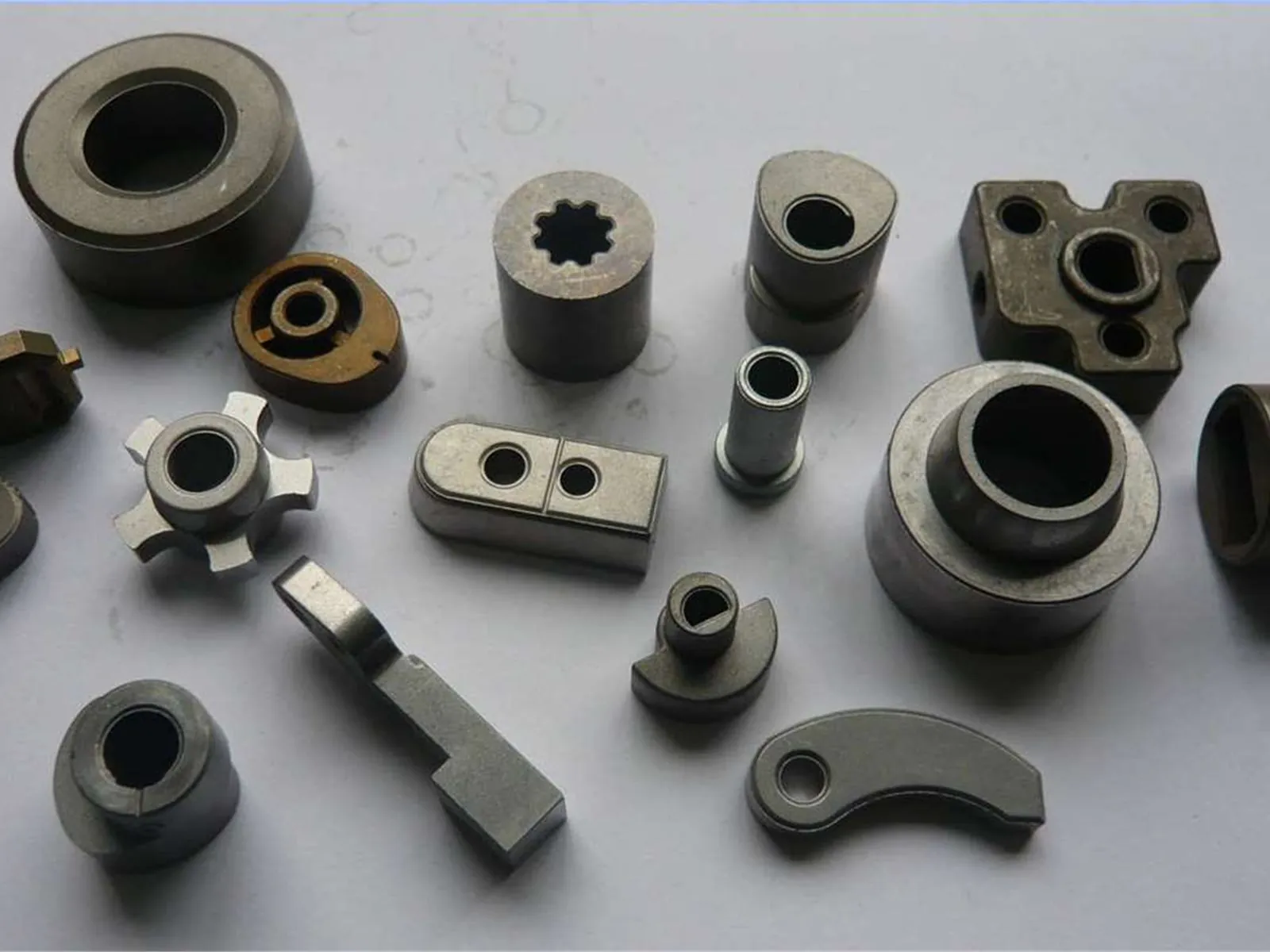
This is why PM is common in gears, hubs, bushings, bearing seats, pump rotors, and many structural parts used in automotive, power tools, appliances, and industrial equipment.
PM can also be a strong choice when buyers want to reduce machining intensity. If the part can be formed close to final shape, the savings come not only from raw material usage, but also from lower cycle time in finishing operations.
Where Casting Usually Wins
Casting becomes attractive when the part does not fit PM compaction logic well.
Common examples include:
- larger housings
- parts with geometry that is not practical in one pressing direction
- designs with more free-form internal or external shape
- lower-to-medium volume programs where PM tooling payback is weaker
Casting also makes sense when the part already has a mature supply chain, the geometry is proven, and the business case does not support a route change.
In other words, casting often wins when the part needs shape freedom more than PM process efficiency.
Cost Comparison: The Real Question Is Not Material Price
Many buyers start by asking which route has lower piece price.
That is understandable, but it is usually the wrong first question.
The better question is:
Which route gives the lowest total finished-part cost for this geometry and this volume?
For PM, cost is strongly influenced by:
- tooling investment
- compaction feasibility
- density target
- required secondary operations
- annual volume
For casting, cost is strongly influenced by:
- mold or pattern cost
- machining allowance
- trimming and cleanup
- porosity control and yield
- part size and wall thickness
That means a cast part can look cheaper in early quotation but lose its advantage once machining, scrap, or tolerance correction is fully counted. The reverse can also happen: PM may look attractive in theory but become commercially weak if the geometry forces too many special features or follow-up operations.
Geometry and Design Freedom
This is one of the clearest dividing lines.
PM uses a rigid die. That brings excellent repeatability, but also design limits. The part usually needs a practical pressing direction, predictable ejection, and geometry that works with compaction tooling.
Casting generally allows more freedom in:
- external shape
- internal cavities
- more organic or less axis-driven forms
- larger part envelopes
If the design depends on that shape freedom, casting may be the more natural route.
If the design is compact, function-driven, and repeatable, PM may be the better manufacturing system.
Tolerances and Secondary Operations
Many buyers assume casting is rough and PM is precise.
That is directionally true for many structural parts, but it is still too simple.
PM often offers strong repeatability on compact parts, especially when sizing is added where needed. This makes it attractive for gears, bores, bearing-related features, and structural components with practical dimensional targets.
Casting can still be the right choice, but it often relies more heavily on machining when tighter tolerances are needed.
The commercial decision usually depends on how many critical dimensions must be held and whether those dimensions can be controlled economically after the primary forming step.
Material and Performance Considerations
PM and casting do not create the same microstructure or performance profile by default.
Standard PM parts usually retain some controlled porosity unless additional densification routes are used. That can be a limitation in some applications, but it can also be useful in parts such as self-lubricating bearings.
Casting routes can support larger fully solid parts, but they bring their own concerns around shrinkage, internal soundness, and machining stock.
This is why the correct comparison is not only:
- PM versus casting
It is also:
- which PM material
- which casting route
- what performance level is actually required
- what finishing steps are acceptable
A Practical Decision Framework
If you are choosing between PM and casting, ask these questions:
- Is the part compact enough and directional enough for PM compaction?
- What is the real annual volume?
- Which dimensions are truly critical?
- How much machining is acceptable after primary forming?
- Is the current pain point piece price, scrap, tolerance, or launch risk?
If most answers point toward repeatability, high volume, compact geometry, and cost pressure on machining, PM is often worth serious evaluation.
If most answers point toward larger size, freer geometry, or weaker PM tooling economics, casting may remain the better route.
Common Cases Where PM Replaces Casting
PM is often evaluated as a replacement for casting when:
- the part is smaller than the original casting route really needs
- machining cost is too high
- repeatability needs to improve
- material waste matters
- annual demand is high enough to justify dedicated PM tooling
The strongest conversion projects usually start with a clear pain point instead of a generic process comparison.
Conclusion
Powder metallurgy and casting are both valuable metal forming routes, but they win in different situations.
PM is usually stronger for small-to-medium repeatable parts at stable volume where material efficiency, dimensional consistency, and lower machining cost matter. Casting is usually stronger for larger or more shape-free parts where PM die compaction would be too restrictive.
The best answer comes from reviewing the actual drawing, annual demand, critical tolerances, and current manufacturing pain point rather than comparing the two processes in abstract terms.
Need Help Comparing PM and Casting for a Specific Part?
If you are evaluating a conversion project or choosing a route for a new component, send your drawing, annual demand, current process, and the biggest commercial or technical concern.
We can review whether PM is a strong fit, where casting may still be better, and what tradeoffs matter most for your program.
Related Resources
Use these internal guides to keep exploring process planning, materials, quality control, and quoting steps for this topic.
Powder Metallurgy vs CNC Machining: Cost, Tolerance, and Volume Guide
Compare powder metallurgy and CNC machining across tooling cost, unit cost, tolerances, material utilization, and production volume so you can choose the right process for your part.
What Is Powder Metallurgy? Process, Benefits, Materials, and Applications
Learn what powder metallurgy is, how the PM process works, what materials it uses, and why it is often chosen for high-volume precision metal parts with low material waste.
Powder Metallurgy vs MIM: Complete Cost and Performance Comparison
Compare powder metallurgy and MIM across cost, material properties, design complexity, tolerances, and production volume to choose the right process for your part.
Powder Metallurgy Tooling Cost Guide: What Drives Cost and When It Pays Back
Understand what drives powder metallurgy tooling cost, from part geometry and cavities to tolerance demands and secondary operations, and learn when the investment pays back at production volume.
Frequently Asked Questions
Is powder metallurgy cheaper than casting?
Sometimes, but not always. PM is often more cost-effective for compact, repeatable parts at medium-to-high volume, while casting can be more practical for larger or more shape-complex parts that do not fit PM die compaction well.
When should a buyer choose casting instead of powder metallurgy?
Casting is often the better route when the part is large, has geometry that does not suit one pressing direction, or needs design freedom that would be difficult in a rigid PM die.
Does powder metallurgy have better tolerances than casting?
For many small and medium structural parts, PM can offer better as-formed repeatability than general casting routes. But the final answer still depends on the exact casting process, the part geometry, and whether sizing or machining is added after PM.
Expert Review
Yao Qingpu
Powder Metallurgy Manufacturing Expert at SinterWorks Technology
Yao Qingpu works with global buyers on powder metallurgy design review, material selection, tolerance planning, cost-down opportunities, and production feasibility. His experience covers PM gears, automotive components, structural parts, and practical DFM support for long-run manufacturing programs.